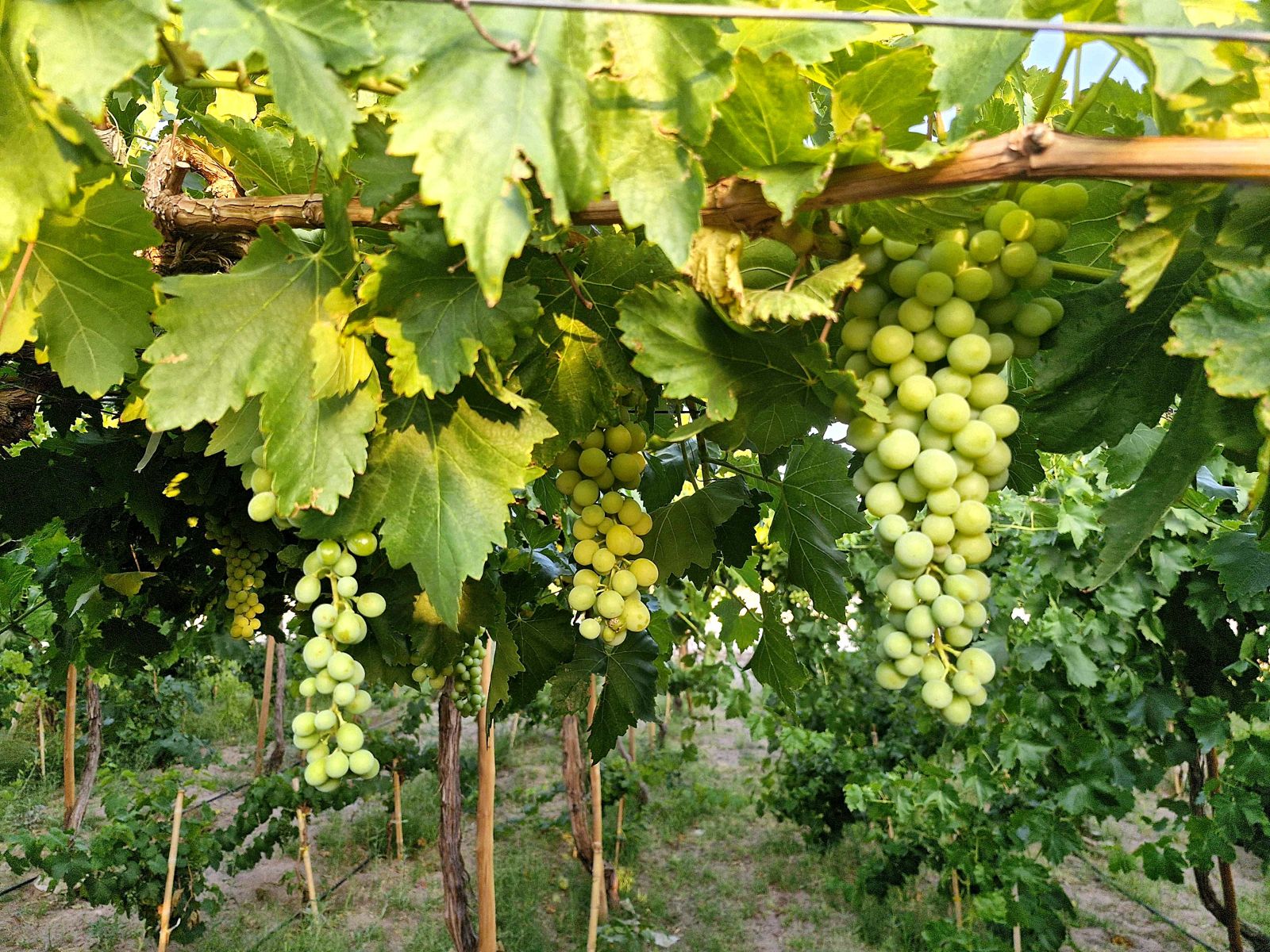
The first question everyone asks when they arrive is the same: how can there be a vineyard here? It’s a fair question. We’re in the driest desert on earth, and at first glance nothing suggests that anything could grow.
The short answer is that a vine doesn’t need rain. It needs water, which isn’t the same thing, and it needs something Atacama has plenty of: a big temperature difference between day and night.
The water doesn’t come from the sky, it comes from above
The water for our vines is snowmelt. It comes down from the mountains, arrives through the channels the ayllu has managed for generations, and we drip-irrigate it plant by plant. Nothing evaporates along the way and nothing is wasted.
That channel system is older than any vineyard. It’s the same infrastructure the ayllus of Solor and Toconao have farmed with since long before grapes arrived, and the reason there are oases here where the map says desert.
A vine with little water and lots of sun gets stressed. And a stressed vine, within limits, gives better fruit than a comfortable one.
Twenty degrees between midday and dawn
Here a summer day can go from scorching heat to near freezing in the same 24 hours. That temperature swing is what winemakers look for, and almost nobody has it on this scale.
During the day the plant works in direct sunlight and produces sugar. At night, in the cold, it slows its metabolism and stops burning what it stored. The result is a grape that concentrates sugar without losing acidity, which is exactly the combination that’s hard to achieve in warm climates.
Add the altitude to that. More ultraviolet radiation makes the plant thicken the grape skins to protect itself, and the skin is where the color and much of the wine’s structure come from.
What the dryness gives back
There’s an advantage almost no one talks about: there are practically no fungi here. The diseases that force growers to treat vineyards in humid regions need moisture to exist, and in Atacama they don’t find it.
That means less intervention. It isn’t a marketing decision, it’s a consequence of the place.
And yet it’s fragile
None of this comes free. Snowmelt depends on the snow in the mountains, and that snow isn’t what it was thirty years ago. The altiplano winter, which brings the only rain of the year in summer, is less and less predictable.
That’s why the water is managed by everyone together. It isn’t up to each landowner: the ayllu sets the turns, and that’s why there’s still water to irrigate with.
Come and see it
You can walk through the vineyard. The Wine Route includes the full tour with the winery and ends with a tasting at the lookout, and the Atacama Aventura package includes it on the third day.
What surprises people most isn’t the wine. It’s seeing green vines with the salt flat behind them and understanding, standing right there, that the two live side by side.
The Wine Route leaves from the hotel, with a local guide from the ayllu.
See the Wine Route